Simple Wedding Dresses: 5 Minimalist Styles That Look Expensive (2026)
All images in this post were created with Try My Dress. Upload your photo and see yourself wearing any dress style in seconds. Try on wedding dresses, guest outfits, or any dress you can imagine. Try it free →
The simple wedding dress is having its biggest moment in two decades. After years of cathedral trains, 3D floral applique, and bedazzled bodices, the most-saved bridal images on Pinterest right now are quiet: a column of silk crepe, a bias-cut slip, a clean square neckline, no veil at all. This guide breaks down what "simple" actually means in 2026, the five categories worth knowing, the fabrics that separate luxe from cheap, and the one styling rule that keeps a minimalist gown from looking under-dressed.
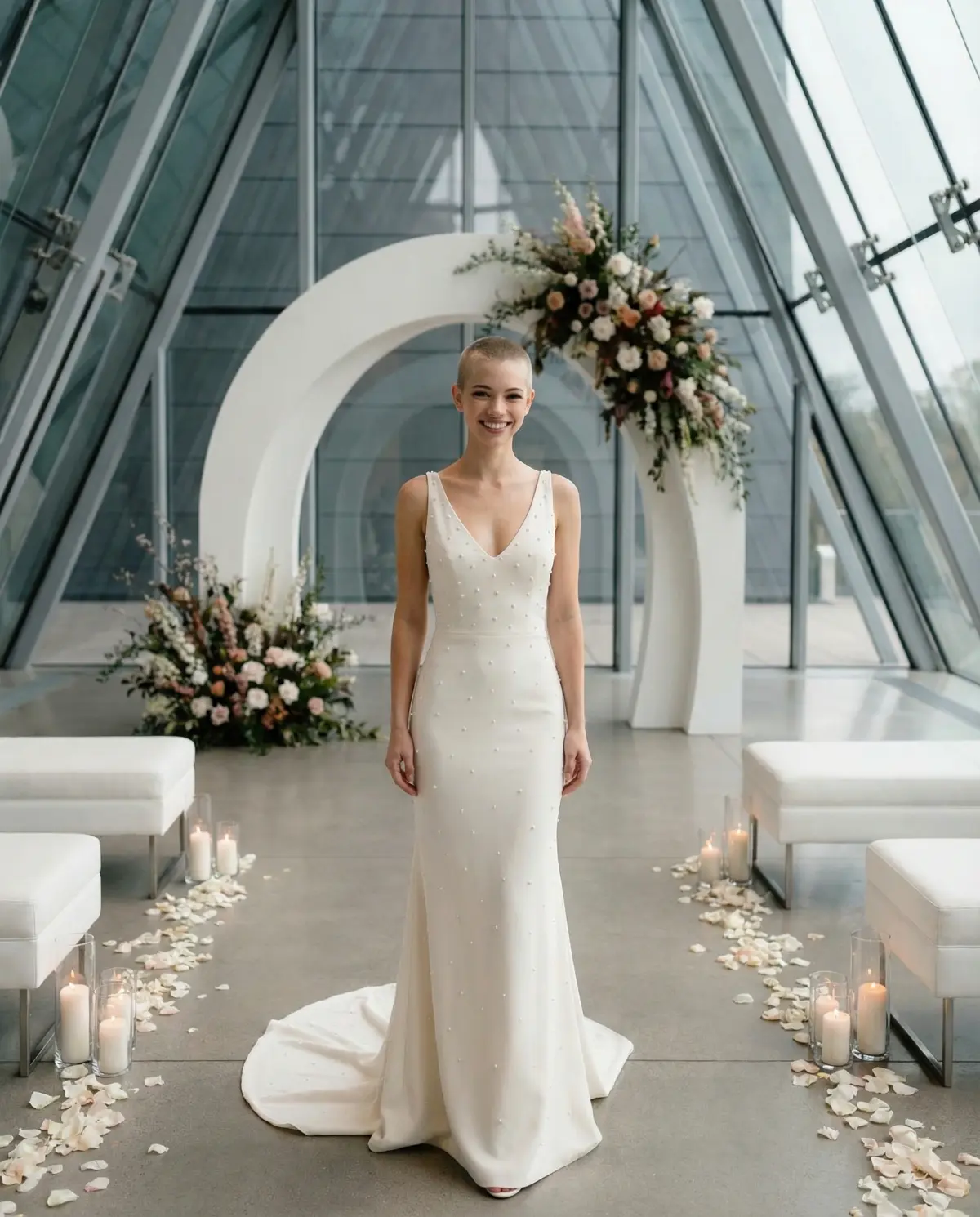
What "Simple" Means in Bridal in 2026
Simple is not the same as plain, basic, or cheap. In bridal, simple is a deliberate aesthetic choice that prioritises silhouette, fabric, and fit over surface decoration. There is no lace, no beading, no embroidery, no 3D flowers. The dress earns its impact through proportion and material quality alone — which is why a great simple gown is often harder to make (and more expensive per yard) than a heavily embellished one.
The shift is part of a broader anti-maximalist movement across fashion. Quiet luxury, Carolyn Bessette nostalgia, and the rise of brands like Khaite, Toteme, The Row, and Danielle Frankel have pushed brides toward gowns that look more like a couture evening dress than a princess costume. The other drivers are practical:
- Overwhelm. Brides scrolling thousands of images for months end up craving the visual rest a clean dress provides.
- Cost. A simple silk crepe column from an indie label can cost less than half what a comparable embellished gown from a traditional bridal designer runs.
- Versatility. A slip dress can be worn again. A cathedral ball gown cannot.
- Sustainability. Less fabric, no synthetic appliques, easier to resell or rewear.
- Modern aesthetic. A simple dress photographs cleanly on iPhone, looks intentional in a city hall, and ages better in photos than a trend-driven embellished one.
If your venue is anything other than a traditional cathedral or grand ballroom, simple is probably the smarter brief.
The 5 Categories of Simple Wedding Dress
Almost every minimalist gown falls into one of these five buckets. Pick your category first, then shop the silhouette — not the other way around.
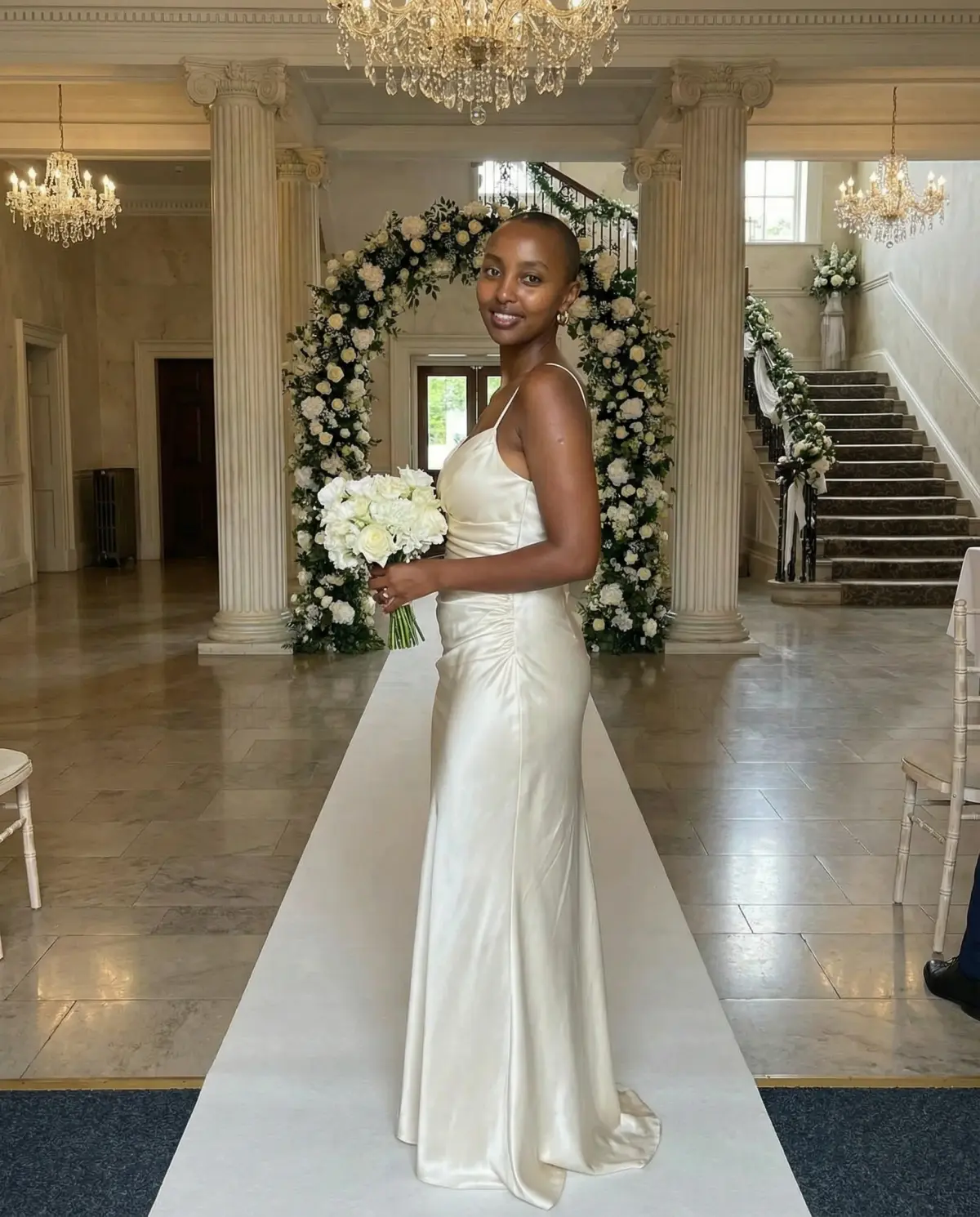
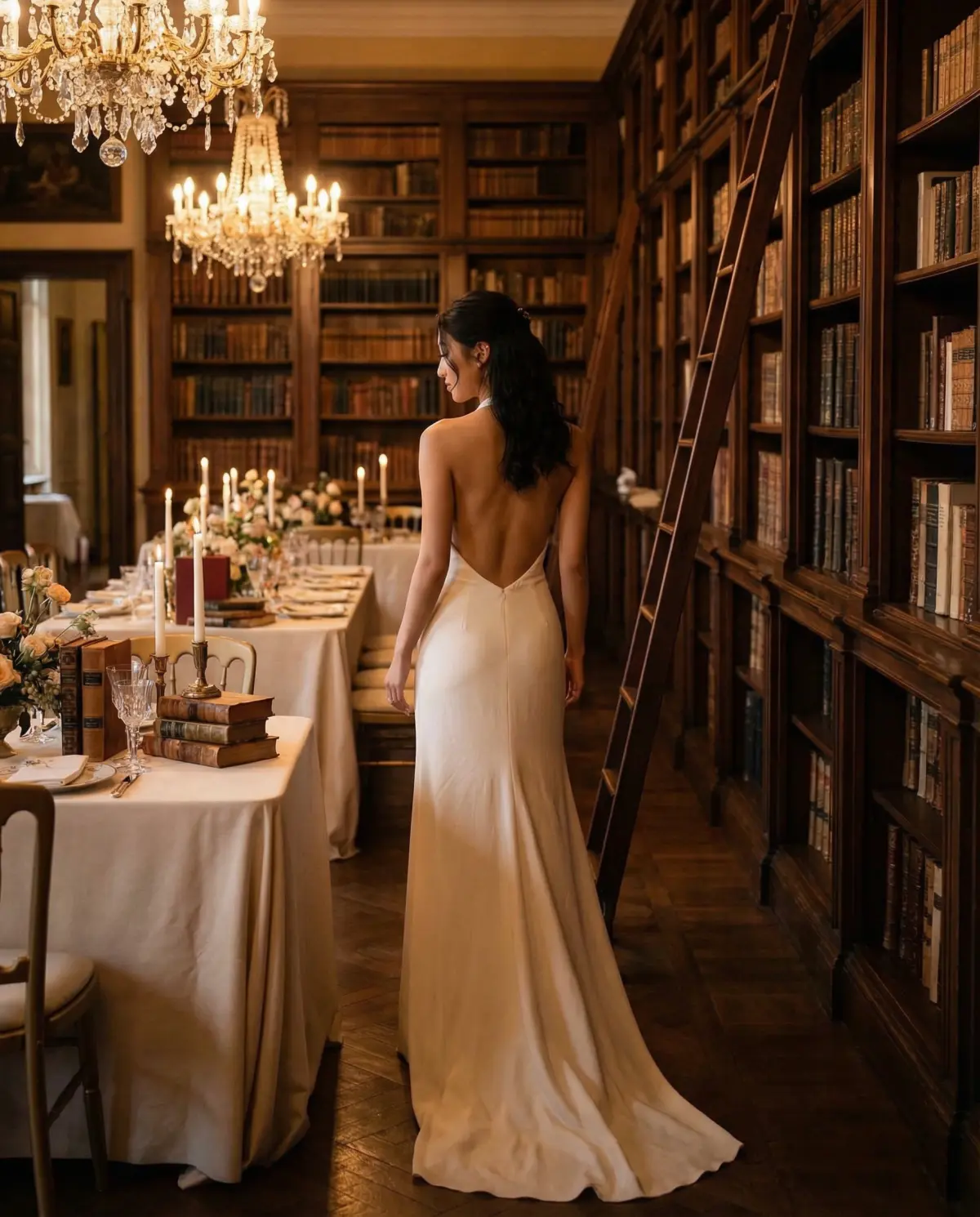
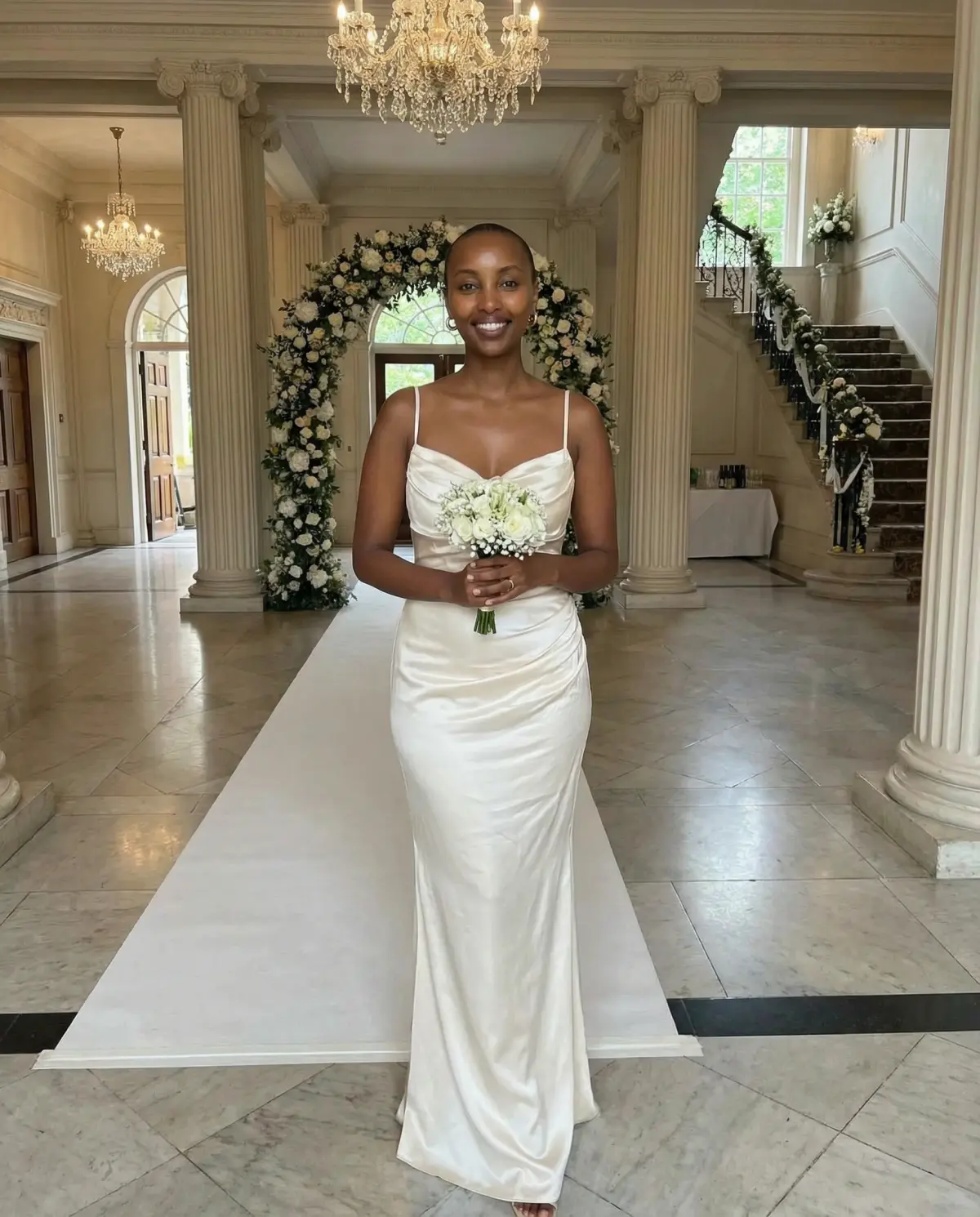
1. The Slip Dress (Modern Romantic)
A bias-cut silk-look gown that skims the body and pools slightly at the floor. Spaghetti straps or a thin strap, a low cowl or V-neck, and zero structure underneath. This is the dress that defined the minimalist bridal revival and still sells out at Reformation and Galvan every season.
- Best for: garden weddings, beach ceremonies, second receptions, city hall, hourglass and lean frames.
- How to elevate: add a long cathedral veil for ceremony only, or a tailored white blazer over the top for the city hall version.
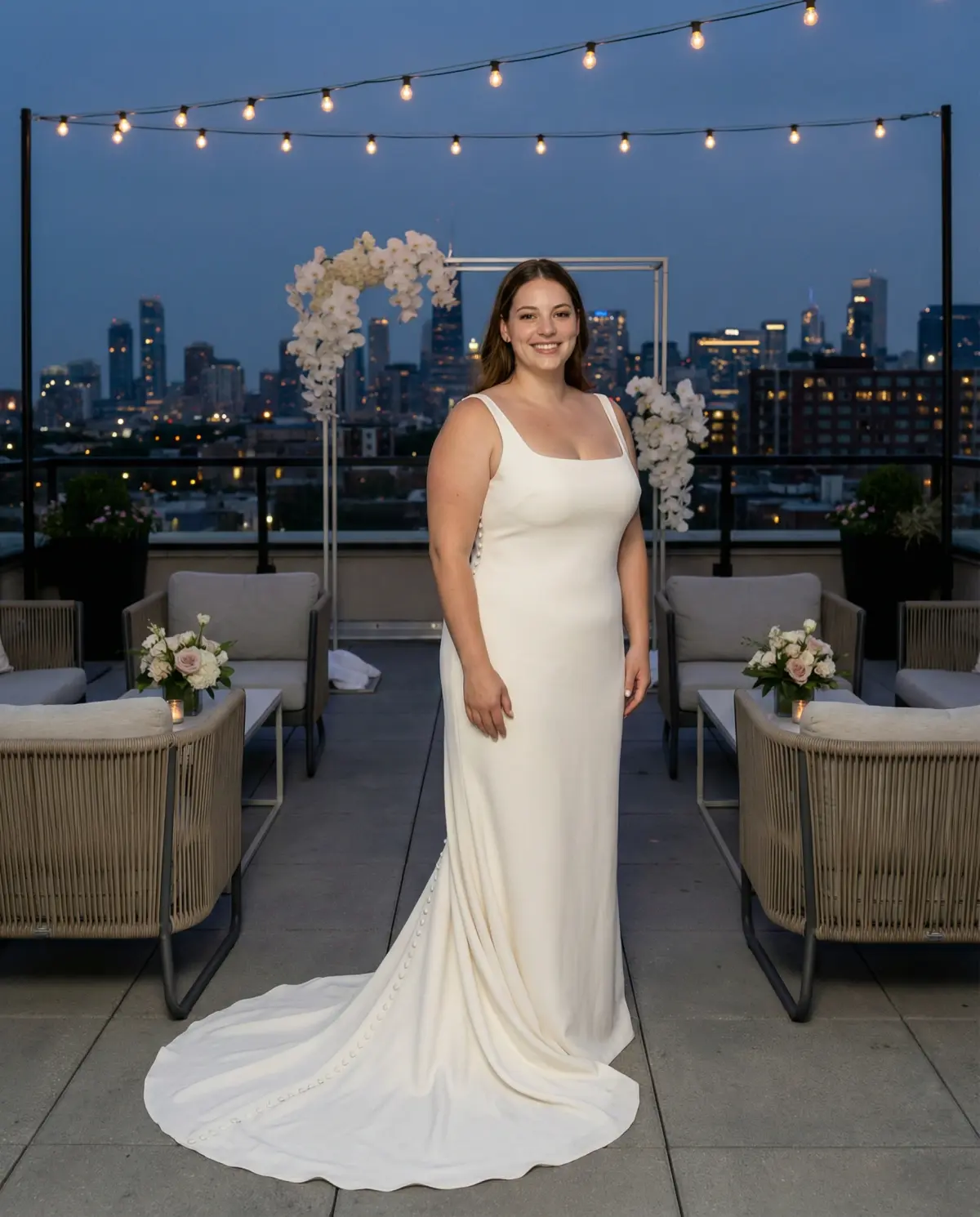
2. The Column / Sheath (Architectural)
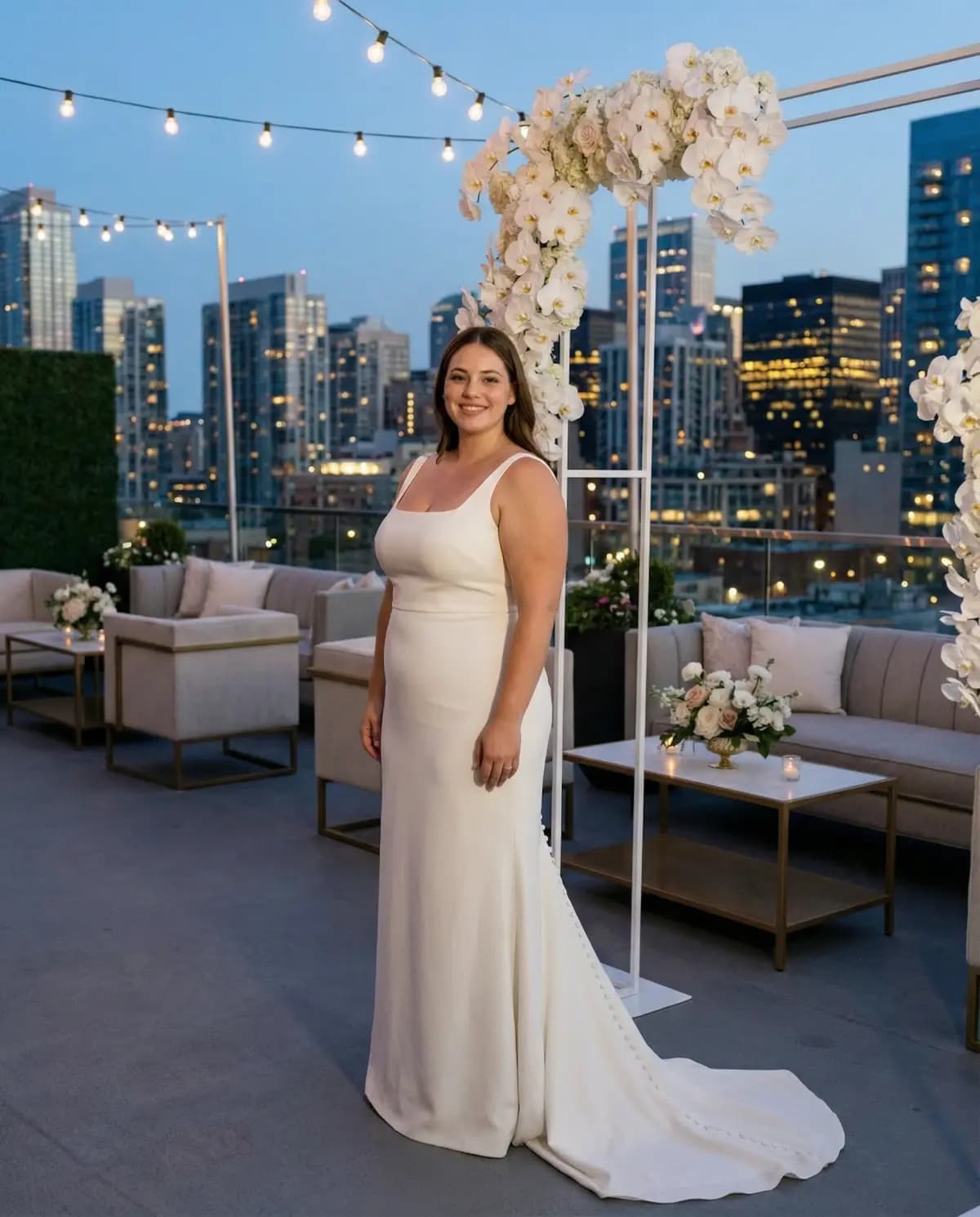
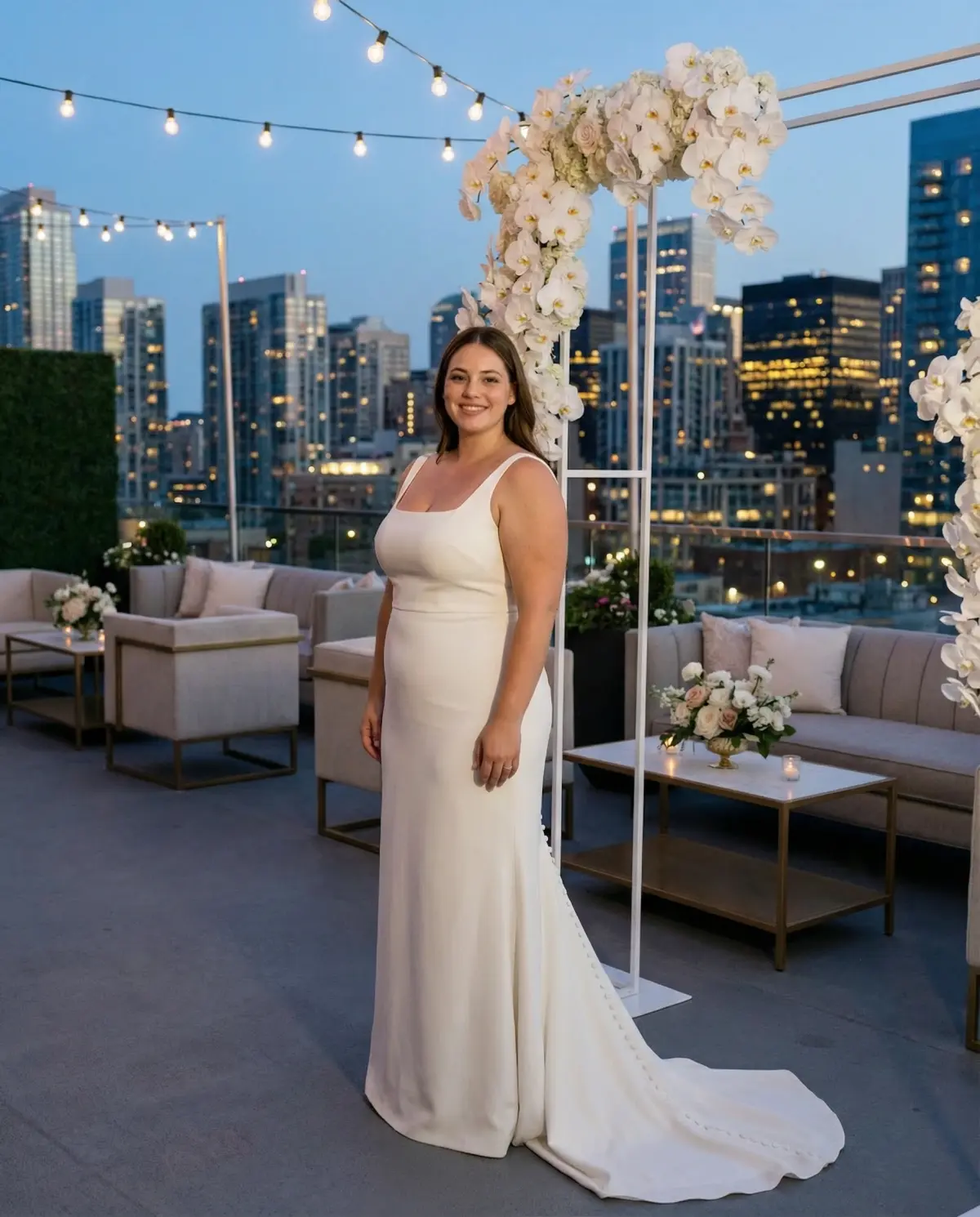
A straight, narrow silhouette that runs floor-to-shoulder in one clean line. Often a square or boat neckline, sometimes a turtleneck. This is the Carolyn Bessette-coded category — the dress that built her wedding into a permanent reference point.
- Best for: modern industrial venues, museum weddings, taller and rectangular frames, minimalist chapels.
- How to elevate: opera-length gloves, a pair of architectural drop earrings, hair pulled back severely. Nothing else.
3. The Crepe A-Line (Forgiving Classic)
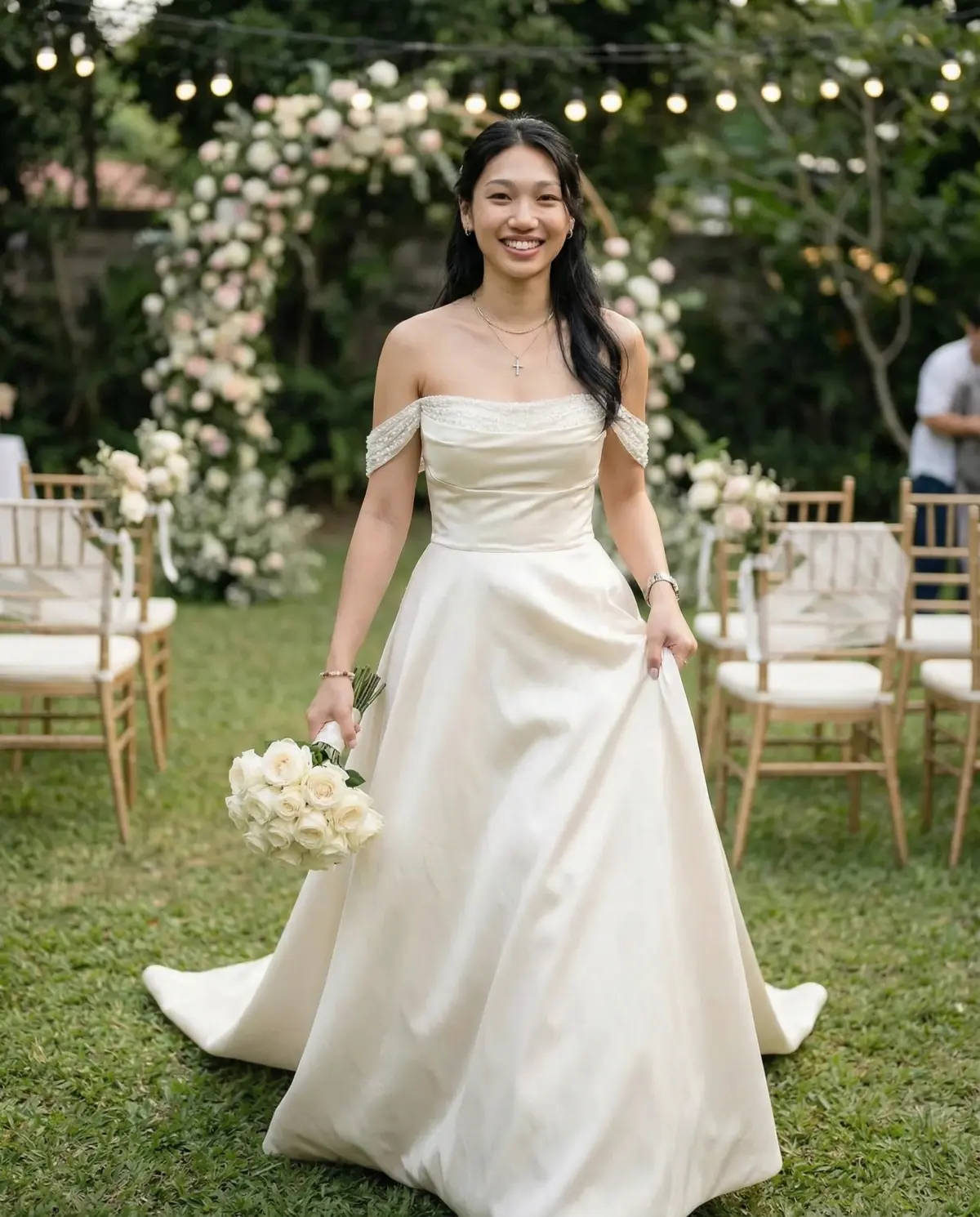
A gentle A-line cut from heavy crepe rather than tulle or satin. The crepe drapes against the body without clinging, hides the midsection, and skims the hips. This is the workhorse of simple bridal — the most flattering category for the widest range of bodies.
- Best for: almost everyone, almost every venue. The default safe pick.
- How to elevate: a structured belt at the natural waist, a pair of pearl drop earrings, a sleek low chignon.
4. The Tea-Length (Vintage Simplicity)
A skirt that hits between the knee and ankle, usually with a fitted bodice and a slightly fuller skirt. Cotton, silk faille, or organza. Reads vintage without being costumey, and feels purpose-built for garden weddings, courthouse afternoons, and rehearsal dinners doubling as the main event.
- Best for: garden ceremonies, city hall weddings, second-event looks, petite frames who get swallowed by a floor-length gown.
- How to elevate: a pair of statement satin pumps, a small birdcage veil, a red lip if you can pull it off.
5. The Minimal Blazer / Tuxedo Dress (City Hall Modern)
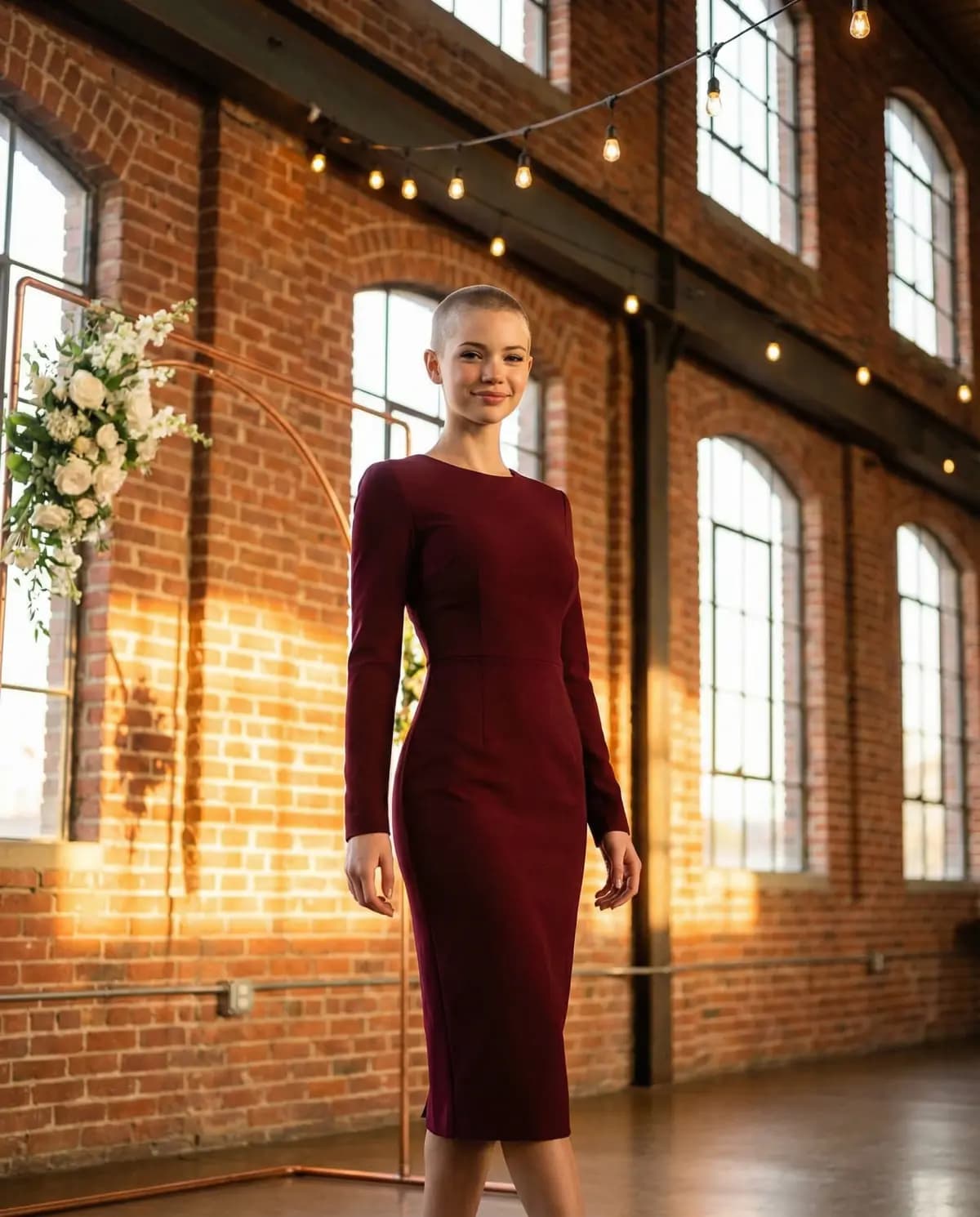
A tailored white blazer worn as a dress, or a structured mini/midi with sharp tailoring. Often with built-in shorts or a pencil skirt underneath. This is the category that has exploded for elopements, courthouse weddings, and rehearsal dinners.
- Best for: city hall, elopements, rehearsal dinners, after-parties, second looks.
- How to elevate: sculptural earrings, sheer tights, a pointed-toe stiletto in white or nude. A clutch the size of a phone, nothing bigger.
Fabric Guide: What Makes "Simple" Look Luxurious vs Cheap
With a simple dress, fabric is the entire dress. There is no lace to distract the eye from a thin polyester. There is no beading to hide a sloppy seam. The fabric carries everything — and the difference between a $400 simple gown and a $4,000 simple gown almost always comes down to material weight and drape.
Here is what to feel for in person:
| Fabric | What It Should Feel Like | Common Cheap Substitute |
|---|---|---|
| Silk crepe | Heavy, matte, structured but fluid. Holds a fold. | Polyester crepe — lighter, shinier, creases instantly. |
| Italian double-faced satin | Substantial weight, a soft sheen on one side, matte on the other. Drapes in big folds. | Polyester satin — slick, plasticky shine, clings in unflattering places. |
| Silk mikado | Stiff, almost paper-like. Holds an architectural shape. | Polyester mikado — feels papery and cheap, wrinkles oddly. |
| Silk faille | Slight ribbed texture, dry hand-feel, holds shape. | Polyester taffeta — louder rustle, harder shine. |
| Duchess satin | Heavy, formal, structured for ball-gown shapes. | Lightweight satin — looks like a bedsheet. |
Three quick tests to run in the dressing room:
- Pinch test. Grab a handful, let go. Silk crepe and good satin fall back into place. Cheap polyester stays creased.
- Light test. Hold the fabric to a window. If you can see your hand through a single layer, it needs a heavier lining or a heavier fabric.
- Weight test. Lift the hem. A quality simple gown has surprising weight. If it feels weightless, it will photograph weightless — flat, crinkled, and cheap.
Want to see how different fabrics look on your body before you book a single appointment? You can try it on with TryMyDress and compare a slip, a column, and a crepe A-line on the same photo of you.
Simple Wedding Dress by Body Type
Simple silhouettes are unforgiving — the right cut for your body matters more than it does with embellished gowns where the eye gets distracted.
| Body Type | Best Simple Silhouette | Why |
|---|---|---|
| Pear (hips wider than shoulders) | Crepe A-line with structured bodice | Skims the hips, draws eye up to a clean neckline. |
| Hourglass (balanced bust/hips, defined waist) | Bias-cut slip or column with a belt | Shows the waist without competition from beading. |
| Apple (carries weight mid-section) | Empire-line column or A-line in heavy crepe | Skims under the bust, drapes straight down without clinging. |
| Petite (under 5'4") | Tea-length, mini blazer dress, or column with V-neck | Avoids being swallowed by floor-length volume; V-neck adds length. |
| Tall and lean | Bias slip or sheath | Built for this body. Practically no other rules. |
| Plus | Crepe A-line with structured bodice and substantial straps | Heavy fabric drapes cleanly, structured top supports without being a corset. |
The universal rule: simple gowns demand alterations. Budget $300–$800 for tailoring on top of the dress price. A $500 dress that fits perfectly will out-photograph a $3,000 dress that fits badly, every single time.
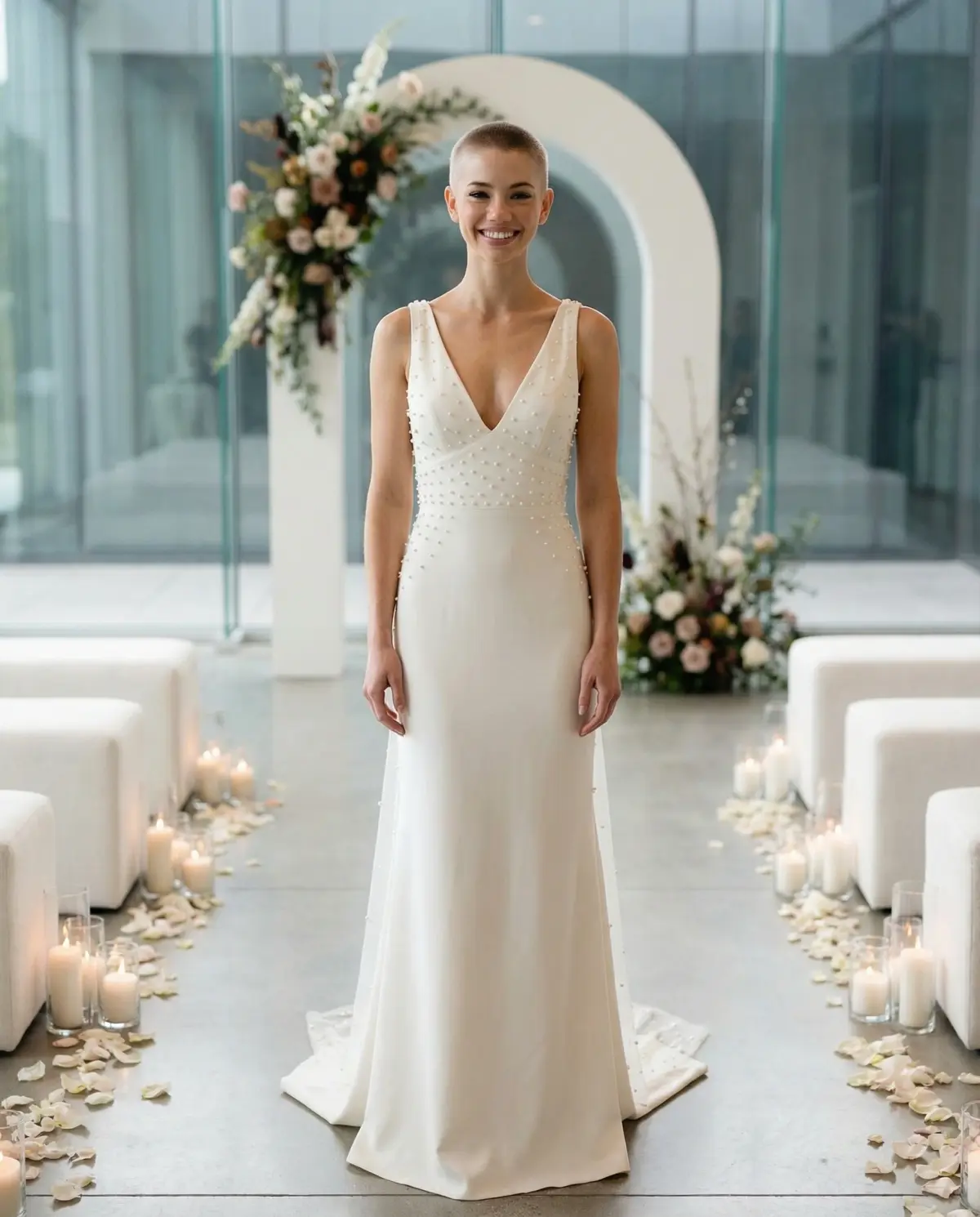
How to Accessorise a Simple Dress Without Overdoing It
The biggest mistake brides make with a simple dress is treating it as a blank canvas and piling on extras to compensate. The result reads cluttered and undermines the entire point of the gown.
The rule: one statement, max. Pick a single hero accessory and let everything else fade.
- Statement earrings OR a structured veil — never both. Big earrings compete with a long veil. Pick one.
- Architectural headband instead of a tiara. A satin or pearl-embellished headband modernises the look. Tiaras drag it back to 1998.
- Sculptural shoes worth seeing. With a tea-length or shorter dress, the shoe becomes part of the outfit. Spend on a satin pump or an Aquazzura, not a $90 dyeable.
- One bold lip OR a strong eye — never both. Same logic as earrings vs veil.
- Skip the bouquet flourishes. A single tied bunch of white anemones or just a clutch of ranunculus works harder than a cascading $400 bouquet.
- Hair: pulled back or polished waves. Loose, undone, "beachy" hair fights a simple gown. Slick it back or finish it cleanly.
A simple dress should look like you put it on, glanced in a mirror once, and walked out the door looking inevitable. Every accessory has to earn its spot.
Where Simple Dresses Shine vs Where They Underwhelm
Venue is the second biggest decision after silhouette. A simple dress is a perfect match for some settings and a bad fit for others.
| Venue Type | Simple Dress Fits? | Notes |
|---|---|---|
| City hall / courthouse | Perfect | Built for it. Tea-length or blazer dress shines. |
| Garden / outdoor ceremony | Perfect | Slip or A-line in a soft fabric. |
| Modern industrial / loft / museum | Perfect | Column or sheath. Architectural venue, architectural dress. |
| Minimalist chapel | Perfect | Crepe A-line. Veil optional. |
| Beach | Great | Bias slip, no train. |
| Restaurant / private dining | Great | Slip or blazer dress. |
| Traditional cathedral | Risky | The space demands volume and a long veil. A simple gown can read under-dressed. Add a cathedral veil to bridge. |
| Grand hotel ballroom | Risky | The room expects drama. A simple gown can disappear. Pick a column with a dramatic back detail. |
| Castle / estate / black-tie destination | Risky | Same problem. The setting brings the formality, and a simple dress may not match the energy of the rest of the wedding. |
If your venue is on the "risky" list, simple can still work — but you'll need to rebalance with a single dramatic element: a long veil, opera gloves, an architectural back detail, or a sweeping cape. Otherwise, lean into a more structured silhouette than your instinct suggests.
Budget Reality: Simple Doesn't Mean Cheap
This is the single most misunderstood thing about simple bridal. Brides assume that because there is no lace, no beading, and no embellishment, the dress should be cheap. The opposite is often true. Good fabric — real silk crepe, double-faced satin, mikado — costs more per yard than the synthetic base of a heavily embellished gown. And the construction has to be flawless because there is nothing to hide imperfections behind.
Realistic price brackets for genuinely simple gowns:
| Tier | Price Range | Brands to Know |
|---|---|---|
| Budget | Under $500 | Lulus, ASOS Bridal, Azazie sheath collection. Polyester or polyester-blend. Useful for second looks or rehearsal dinners. |
| Mid-range | $500–$1,500 | Reformation, Anthropologie BHLDN, Cult Gaia, Ghost London. Real silk-blend or quality crepe. The sweet spot. |
| Designer simple | $1,500–$5,000 | Galvan, Bevza, Sleeper, smaller indie bridal labels. Heavier silk, better construction. |
| Couture-adjacent simple | $5,000+ | Danielle Frankel, Khaite Bridal, Toteme made-to-order, Vera Wang Haute. Real luxe fabric, fully tailored. |
The mid-range tier is where most brides land and where the value is best. A $1,200 silk-blend column from Reformation, properly tailored, will out-photograph a $4,000 polyester ball gown every time.
Simple Wedding Dress FAQ
Is a simple wedding dress appropriate for a formal wedding?
Yes — but only if you rebalance. A simple dress at a formal wedding works when paired with a single dramatic element: a cathedral-length veil, opera gloves, a sweeping cape, an architectural back detail, or statement opera-length earrings. The silhouette stays clean while one accessory carries the formality of the venue. What does not work is showing up to a black-tie cathedral wedding in a plain bias slip and nothing else — the space will swallow the dress and read as under-dressed. Match the simplicity to the venue's energy, then add one bridge piece if there's a gap.
How do I make a simple wedding dress look more bridal?
Three highest-leverage moves: a veil, a great manicure, and pulled-back hair. A long veil over a slip dress instantly signals "bride" without competing with the silhouette. A clean manicure (almond shape, pale pink or sheer nude) reads bridal in close-up shots and at the altar. Pulled-back hair — a chignon, a slick low pony, a polished half-up — adds formality and draws the eye to a clean neckline. Skip embellished hair pieces, glittery makeup, and "bridal" jewellery sets that come pre-matched. The combination of those three moves does more than any add-on.
What's the difference between simple and casual wedding dresses?
Simple is a deliberate aesthetic — clean lines, quality fabric, considered tailoring, intentional restraint. Casual usually means lower formality, more comfortable fabrics (cotton, linen, jersey), and styling cues that read closer to a cocktail or summer dress. A simple silk crepe column is appropriate for a black-tie ceremony. A casual cotton slip with espadrilles is for a backyard or beach wedding. Both can be unembellished and floor-length, but the fabric, structure, and styling cues set the formality level. If your venue is formal, you want simple. If your venue is laid-back, casual gives you permission to dress down further.
Can I wear a simple slip dress to a church ceremony?
Yes, with two adjustments. Most churches and traditional ceremonies expect covered shoulders, so add a delicate long-sleeve bolero, a sheer overlay, or a bridal jacket for the ceremony portion only — then remove for the reception. Second, length matters: bias slips can read more like a nightgown than a wedding dress in a religious setting, so make sure the cut is structured rather than cling-y, and the fabric has enough weight to hold its shape against the formality of the space. A long veil also helps bridge the visual gap. Slip the bolero off after the recessional.
What shoes work with a simple wedding dress?
For floor-length, the shoe almost doesn't matter — pick something comfortable in white, ivory, or nude that won't peek out. A pointed-toe pump or a low block heel both disappear under the gown. For tea-length, mini, or anything that shows the shoe, the shoe becomes part of the outfit and should be worth seeing: a satin Aquazzura, a pearl-embellished mule, a sculptural Cult Gaia heel. Avoid dyeable bridal pumps that look orthopaedic, and skip anything overly chunky unless the dress is structured enough to balance it. Comfort matters more than people admit — bring flats for the reception.
See Simple Styles on Yourself
Reading about silhouettes only gets you so far. A bias slip that looks effortless on a 5'10" model can read like sleepwear on a 5'2" frame. A column that's chic on a rectangular body can highlight the wrong areas on an hourglass. The only way to know which simple category is yours is to see it on your actual body — and that's normally a year of bridal salon appointments to figure out.
Try My Dress collapses that to a few minutes. Upload one photo, pick a slip, then a column, then a crepe A-line, then a tea-length, then a tuxedo dress. Compare them side by side. See which silhouette your eye keeps landing on. Then walk into the salon already knowing your category, your fabric, and your length — and skip 80% of the indecision.
You can try it on with TryMyDress free, no account needed to start.
Where to Shop
Once you know which styles look best on you, shop here:
- Reformation Bridal – Minimalist silk slips, crepe columns, and clean-lined A-lines in substantial fabric — the strongest pick for brides who want understated, modern bridal with no embellishment. Shop Reformation →
- Anthropologie BHLDN – Modern crepe, satin, and minimalist lace gowns in clean silhouettes. Strong for brides who want simple with a subtle editorial edge — square necks, sleek columns, or soft A-lines. Shop BHLDN →
- Azazie – Simple A-line, sheath, and slip gowns in sizes 0-30 with swatches and home try-on. Helpful for testing fabric drape and tailoring on your own body before committing. Shop Azazie →
- Amanda Novias – Mid-market designer satin and crepe gowns with clean construction and quality lining — a step up in fabric and tailoring for brides who want simplicity that looks couture. Shop Amanda Novias →
Explore These Styles
See AI-generated images for these dress silhouettes:
- Sheath Dresses →Slim, form-fitting silhouette that skims the body.
- Column Dresses →Straight, narrow silhouette that follows the body's natural line.
- Slip Dresses →Minimalist, slinky silhouette inspired by vintage slip dresses.