Black Tie Optional Wedding Guest Dress: What It Means & 5 Outfit Categories (2026)
All images in this post were created with Try My Dress. Upload your photo and see yourself wearing any dress style in seconds. Try on wedding dresses, guest outfits, or any dress you can imagine. Try it free →
What "Black Tie Optional" Actually Means
Black tie optional means the dress code is formal, but tuxedos are not mandatory. For women, a floor-length gown is the safest choice, while a formal cocktail or midi dress in a luxe fabric is also acceptable. For men, a tuxedo is preferred but a dark suit (charcoal, midnight navy, black) is fully acceptable.
The phrase exists to give guests breathing room. The hosts want a formal, elegant atmosphere — chandelier lighting, plated dinner, a dance floor people actually dressed up for — but they don't want anyone skipping the wedding because they don't own a tux or a ball gown. "Optional" lowers the entry bar; "black tie" sets the ceiling. You should always lean toward the formal end. Underdressing at a black tie optional wedding reads worse than overdressing, every time.
The simplest way to think about it: dress one notch below black tie, and one notch above cocktail. That's the entire spectrum you're playing in.
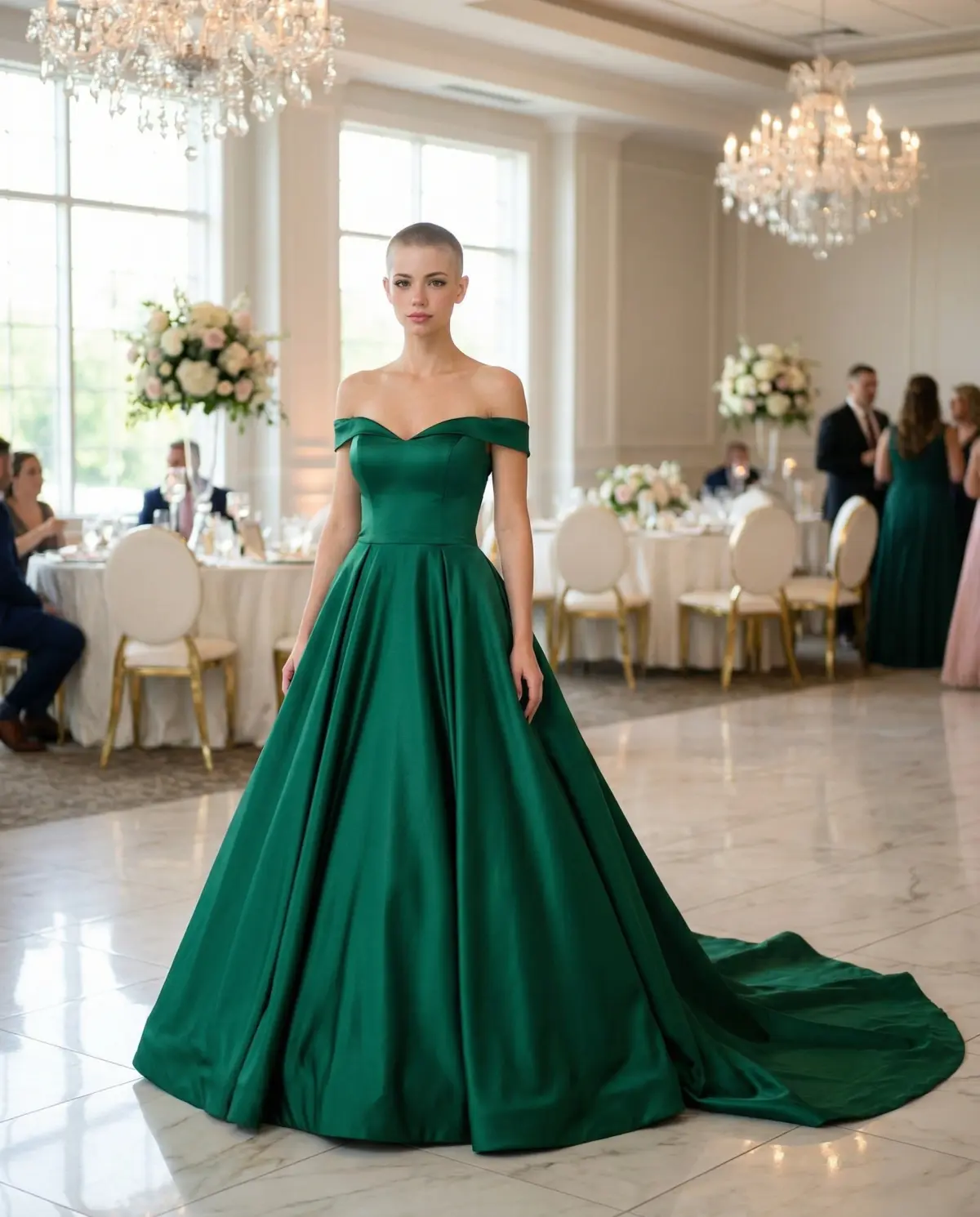
The Wedding Formality Spectrum
To understand black tie optional, you need to see where it sits relative to every other dress code. Wedding invitations use five common formality levels, and each one has a specific visual code. Misreading the code is the most common reason guests show up either over- or underdressed.
| Dress Code | What It Looks Like (Women) | What It Looks Like (Men) | Formality Score |
|---|---|---|---|
| White tie | Full ball gown, floor-length, gloves, fine jewelry | White tailcoat, white tie, white waistcoat | 10/10 |
| Black tie | Floor-length gown in formal fabric (satin, silk, velvet) | Tuxedo, black bow tie, patent shoes | 9/10 |
| Black tie optional | Floor-length gown OR formal midi in luxe fabric | Tux preferred, dark suit acceptable | 8/10 |
| Cocktail | Knee-length or midi dress in dressy fabric | Dark suit, dress shirt, tie | 6/10 |
| Semi-formal / dressy casual | Midi dress or polished separates | Suit (any color) or blazer + dress pants | 4/10 |
Black tie optional sits one rung below strict black tie. In practice, this means roughly 60–70% of the women in the room will be in floor-length gowns, and the remaining 30–40% will be in formal midis or elevated cocktail dresses. If you turn up in a knee-length cotton sundress, you'll look out of place. If you turn up in a satin column gown, you'll fit in perfectly even if half the room is in midis.
The host couple chose this dress code on purpose. They want photos that look like a black tie wedding without forcing every guest to rent a tux. Honor that by dressing up.
5 Outfit Categories for Women at a Black Tie Optional Wedding
There is no single "correct" black tie optional outfit. There are five archetypes that all work, ordered roughly from safest to riskiest. Pick the category that matches your comfort level, the venue, and the season.
1. The floor-length gown (the over-deliver play)
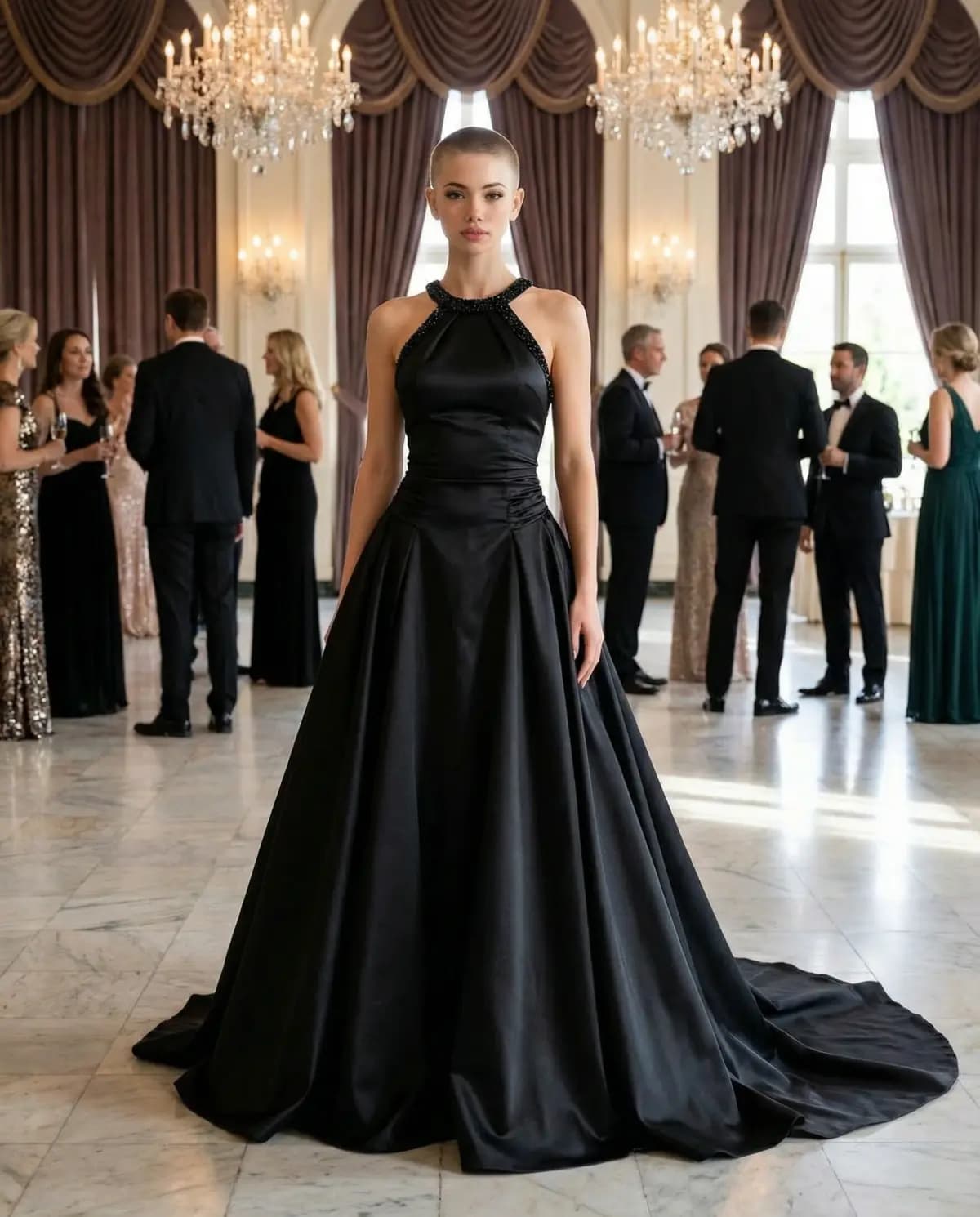
The safest possible choice. A solid-color column gown in silk satin, crepe, or velvet — emerald, midnight navy, deep burgundy, black, or champagne. Clean neckline (one-shoulder, halter, V-neck, or strapless), optional thigh-high slit, and a sweep or chapel hem. This is the choice if you want zero formality stress, want photos you'll be proud of for decades, or want a dress you can re-wear for another black tie event later. You'll never be the most underdressed person in any room wearing this.
2. The formal midi in a luxe fabric
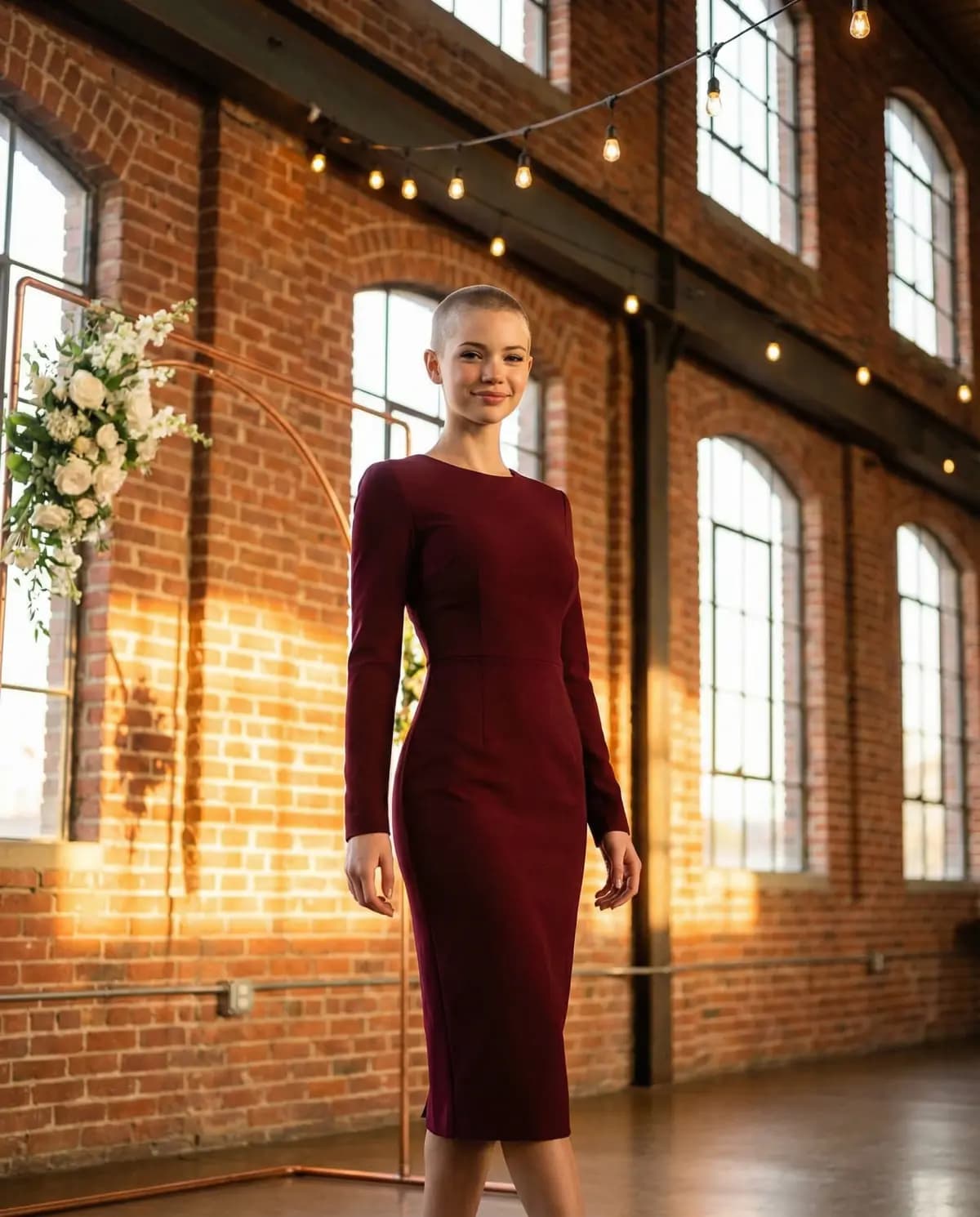
The modern sweet spot, especially for guests under 40. Think a silk crepe midi with a cowl neck, a satin slip midi with delicate straps, or a structured satin midi with a draped front. The length hits between mid-calf and ankle. The fabric is what makes it formal — a midi in cotton or jersey reads cocktail-at-best, but a midi in heavy silk satin reads black-tie-adjacent. Pair with statement earrings and a sleek clutch and you're at exactly the right register.
3. The elegant cocktail dress
A knee-length or just-above dress, but only if the fabric is unmistakably formal — heavy satin, brocade, beaded chiffon, or velvet. This is NOT a sundress. It's a structured cocktail dress with intentional shape: a fitted bodice, a tailored skirt, considered detailing. Add bold jewelry and high heels to push it up the formality scale. Best for younger crowds, city weddings, and guests who feel swallowed by floor-length.
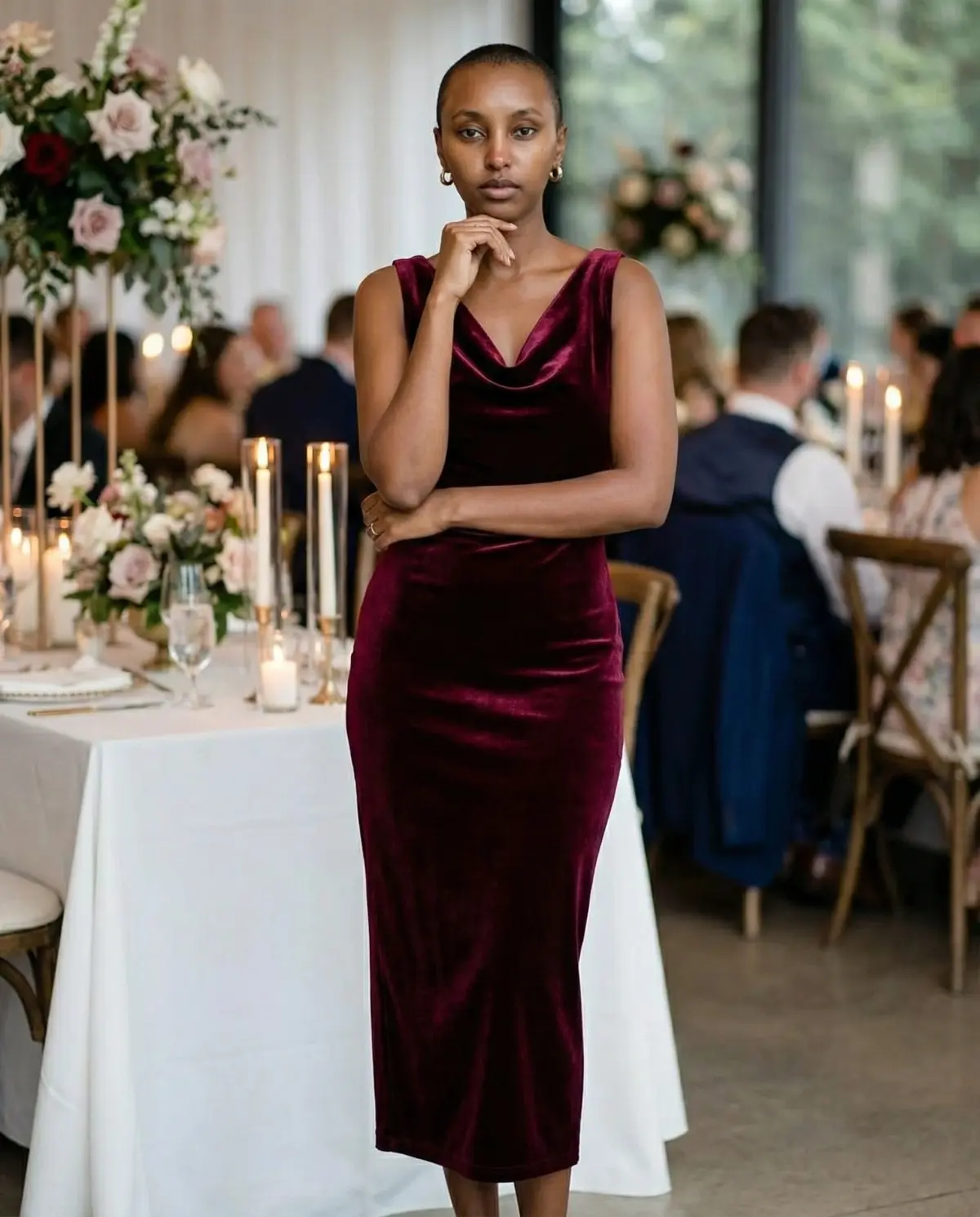
4. The tailored jumpsuit
A modern, on-trend alternative for guests who don't want a dress. The key word is tailored. Wide-leg crepe in black, navy, or a jewel tone, with a sharp shoulder, a defined waist, and a clean neckline (one-shoulder, halter, or plunge). Add heels — never flats — and statement earrings. A casual cotton jumpsuit, anything with a t-shirt top, or anything that reads as a romper is wrong. A formal jumpsuit reads as confident and modern; a casual one reads as if you wandered in from brunch.
5. Dressy separates
A formal silk skirt (floor-length or midi) paired with a structured silk blouse or beaded top. This is the most fashion-forward option and the most personal — when it works, it's stunning, and when it doesn't, it reads as work outfit. Stick to one luxe fabric across both pieces, keep the silhouette intentional, and treat the outfit as a single statement rather than two separates that happen to coordinate. Best for guests with a strong personal style.
You can try it on with TryMyDress to see which of these five categories actually flatters your body before you spend any money.
Fabric Guide — What Reads as "Formal"
Here's the secret most guides miss: at black tie optional, the fabric matters more than the cut. A midi in silk satin reads more formal than a floor-length cotton dress. A cocktail dress in beaded chiffon reads more formal than a maxi in jersey. The eye reads sheen, drape, and structure first, then length.
| Fabric | Verdict | Why |
|---|---|---|
| Silk satin | YES | Sheen + fluid drape = instantly formal |
| Silk crepe | YES | Matte luxury, photographs beautifully |
| Velvet | YES | Pile + depth = automatic black-tie energy (best in fall/winter) |
| Mikado | YES | Structured silk blend — read as bridal-grade formal |
| Beaded chiffon | YES | Embellishment elevates an otherwise sheer fabric |
| Taffeta | YES | Crisp, structural, holds dramatic shapes |
| Heavy crepe | SOMETIMES | Works if the cut is sharp; reads office in casual cuts |
| Wool blend | SOMETIMES | Winter only, and only in a tailored silhouette |
| Brocade / jacquard | SOMETIMES | Texture works for cocktail-length, can read costume in a gown |
| Cotton | NO | Reads daytime, no matter the cut |
| Linen | NO | Reads garden party at best |
| Jersey | NO | Reads loungewear, even in black |
| Casual chiffon (no embellishment) | NO | Reads bridesmaid or daytime |
| Eyelet | NO | Reads brunch |
| Chambray / denim | NO | Don't even consider it |
When you're shopping online, the product photo will tell you 80% of what you need to know. If the fabric catches the light with a defined sheen, you're in formal territory. If the fabric looks flat and matte under studio lighting, ask whether it's silk crepe (formal) or jersey (not). The product description will say.
What NOT to Wear to a Black Tie Optional Wedding
These rules are non-negotiable. Every one of them gets violated at every wedding, and every time the person who violated them ends up in their own photos wishing they hadn't.
- White, ivory, cream, champagne-near-white, or anything that could be mistaken for a wedding dress in photos. This is the cardinal rule of being a wedding guest at any formality level. Even a "blush" that photographs as off-white will earn you side-eye.
- Mini dresses. The cocktail line — knee-length or just above — is the absolute floor. Anything shorter reads as nightclub.
- Sundresses, even in formal colors. A black sundress is still a sundress. The cut, the strap construction, and the fabric weight all betray the formality.
- Casual jumpsuits. Boho wide-leg cotton, utility jumpsuits, anything with a soft drape — wrong. Tailored only.
- Sneakers, casual flats, espadrilles, or flat sandals. Block heels are the lowest acceptable footwear. If you genuinely cannot wear heels, structured pointed-toe flats in metallic or satin are the floor.
- Anything you'd wear to brunch, the office, or a baby shower. If the dress would work for any of those events without modification, it's not formal enough for black tie optional.
- Visible bra straps, visible shapewear, or wrinkled fabric. At this formality level, the foundation matters as much as the dress.
- Crossbody bags, totes, or any everyday handbag. Clutch only. A small structured top-handle bag is the only acceptable alternative.
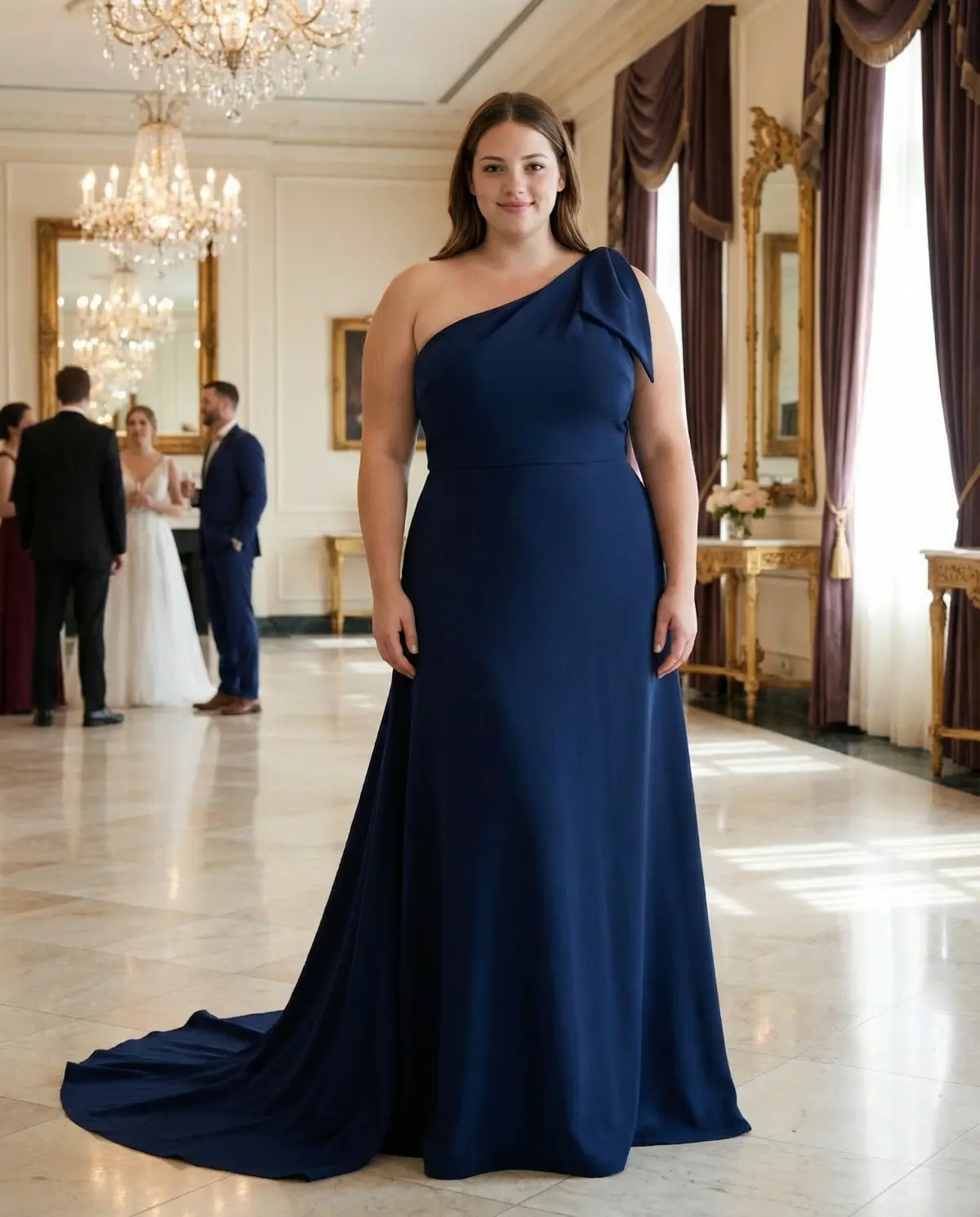
Hair, Jewelry, Shoes for Black Tie Optional
Black tie optional is where accessories stop being optional. They're the difference between "wedding guest" and "wedding guest who took this seriously."
Hair. A formal updo (chignon, low bun, French twist) is the most polished choice and works with any dress neckline. A polished half-up, half-down look is the modern alternative — it photographs beautifully and works for guests with longer hair who don't want the full updo commitment. Avoid: beach waves, anything that reads "I just air-dried it," and anything overly elaborate that competes with the dress.
Jewelry. Statement earrings are the single highest-leverage accessory at this formality level. Chandelier earrings, bold drops, or oversized studs in gold, crystal, or pearl will elevate a simple gown more than any other choice. If you're wearing earrings, skip the necklace — let the earrings carry the look. Stack one or two delicate bracelets on a single wrist, and keep rings minimal. The rule is: one focal point, never two.
Shoes. Heeled sandals, pointed-toe pumps, or strappy heels in metallic, satin, or a complementary jewel tone. Block heels are 100% acceptable and often more practical for outdoor venues, grass, or long evenings on a dance floor. Choose a heel height you can stand in for four hours straight — the most expensive shoes look terrible the moment you start limping. Bring a small pair of folding flats for the dance floor if needed; nobody minds at hour six.
Bag. A structured clutch or small top-handle bag in metallic, satin, beaded, or solid jewel tone. It should hold your phone, lipstick, ID, a card, and nothing else. If you need more than that, you can stash it at your seat or in the coat check. The clutch is part of your outfit, not luggage.
Season + Venue Adjustments
Black tie optional is not a fixed code. It bends to the venue and the season. Reading those signals correctly is what separates a guest who looks appropriate from a guest who looks like they nailed the dress code.
| Setting | What Works | What to Avoid |
|---|---|---|
| Summer outdoor / garden | Lighter satins, silk crepe midi, breathable column gowns, removable cover-up | Velvet, full sleeves, cathedral trains, anything dragging on grass |
| Winter ballroom | Velvet gowns, long sleeves, fuller skirts, jewel tones, faux-fur stole | Strapless without a wrap, sheer fabrics, summer pastels |
| Beach / waterfront | Column or breathable midi, secure straps, block heels or wedges | Stilettos (sand), trains, anything stiff or unforgiving |
| City rooftop | Cocktail to midi length, structured silhouettes, statement jewelry | Wide skirts (wind), anything floor-length you'll trip on |
| Historic venue / cathedral | Floor-length gown, covered shoulders, classic silhouettes | Cutouts, plunging necklines, anything overly trendy |
| Destination resort | Lightweight silk midi, packable fabrics, separates | Anything that wrinkles fatally in luggage |
If the invitation specifies a venue you can look up, look it up. The venue's own photo gallery will show you what previous weddings there have looked like, and that's the single best signal of what the host couple is envisioning.
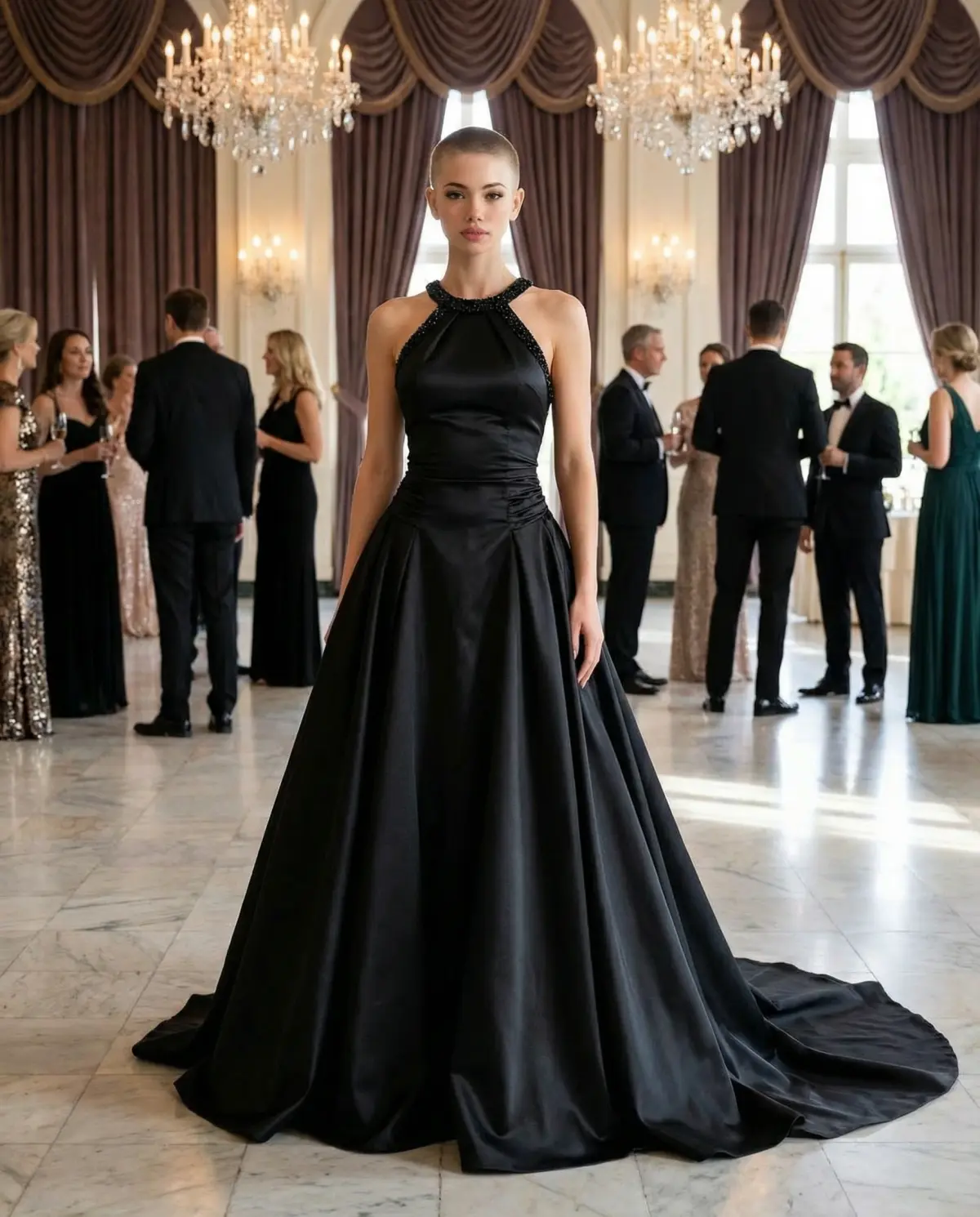
Black Tie Optional FAQ
Can I wear black to a black tie optional wedding?
Yes — black is one of the strongest possible color choices for black tie optional, and the modern American wedding has fully embraced it. The old rule against black at weddings is dead, especially for evening receptions. A black satin column gown, a black velvet midi, or a black cocktail dress in a formal fabric all read as polished and intentional. The only adjustments to consider: if the wedding is daytime, in a sunny outdoor setting, or culturally a context where black still reads as funeral attire (some Southern, Italian, or Indian weddings), a deep jewel tone like emerald, navy, or burgundy may be a softer choice. For 90% of evening black tie optional weddings in the US, black is fully on the table.
Is a cocktail dress okay for black tie optional?
A cocktail dress is acceptable, but only if it clears two specific bars: the fabric must be unmistakably formal (satin, velvet, brocade, beaded chiffon — not cotton or jersey), and the cut must be structured rather than casual (no sundress shapes, no t-shirt necklines). A knee-length silk satin dress with a sculpted neckline and a clutch is fully appropriate for black tie optional. A knee-length cotton fit-and-flare in a floral print is not. If you're choosing the cocktail route, lean into your accessories — statement earrings, polished hair, formal heels — to push the overall look up the formality scale to where it needs to be.
Do I need to wear a gown to a black tie optional wedding?
No, you don't need to wear a floor-length gown — that's the entire point of "optional." But you should know that roughly 60–70% of women at a typical black tie optional wedding will be in floor-length, and you'll be in the visual minority if you choose otherwise. That's fine. A formal midi in luxe fabric, a tailored jumpsuit, or an elevated cocktail dress all work. The only outfits that fail are ones that read casual: sundresses, cotton, mini lengths, or anything that wouldn't look out of place at a brunch. If "no gown" is your firm preference, build the rest of your outfit — fabric, accessories, hair — to compensate.
What's the difference between black tie and black tie optional?
Strict black tie removes the choice — men must wear tuxedos and women must wear floor-length gowns in formal fabric, full stop. Black tie optional preserves the formal aesthetic but lets guests opt down one level: men can wear a dark suit instead of a tux, and women can wear a formal midi or elevated cocktail instead of a full gown. The hosts still want the photos to look formal — chandelier lighting, tailored silhouettes, evening palette — but they're acknowledging that not every guest owns or wants to rent black-tie attire. In practice, the room at a black tie optional wedding will look about 80% as formal as a strict black tie wedding, and that's by design.
Is black tie optional more formal than cocktail?
Yes — meaningfully so. Cocktail is a midrange formality where knee-length is standard and fabrics like jersey, lace, and lighter chiffons are acceptable. Black tie optional is a step up: floor-length is the default expectation, fabrics need to read as luxe (satin, silk, velvet), and accessories carry more weight. If you're trying to map them: a cocktail-coded outfit can usually be pushed to black-tie-optional by swapping the fabric (jersey to satin), adding length (knee to midi), or amplifying the accessories (delicate earrings to statement chandeliers). But a true cocktail dress in a casual fabric will look underdressed at a black tie optional event no matter how good the styling.
Can I wear a midi dress to a black tie optional wedding?
Yes, a midi dress is one of the strongest modern choices for black tie optional, but only if the fabric and styling do the heavy lifting. A silk satin midi with delicate straps, a velvet midi with a cowl neck, or a beaded chiffon midi all read as formal-evening-appropriate. Pair with statement earrings, formal heels (not block sandals), polished hair, and a clutch. Avoid: cotton midis, jersey midis, eyelet midis, anything that would also work at a baby shower. The midi length is having a major moment in formal wear right now, and at most weddings under 2026, you'll see at least 30% of guests in formal midis rather than gowns. You're in good company.
See Your Black Tie Optional Look Before You Buy
The hardest part of dressing for a black tie optional wedding isn't picking the right category — it's knowing whether a specific dress will actually flatter you in the formality register you need. A floor-length emerald gown looks incredible on the model. Whether it looks incredible on you, in your body, with your skin tone, with the styling you'd actually choose — that's the gap that ruins most online dress purchases.
With TryMyDress, you can:
- Upload a single photo and see yourself wearing any black tie optional dress style — gown, midi, cocktail, jumpsuit, separates — before you buy.
- Compare floor-length vs midi vs cocktail in the same color and fabric, on your body, side by side.
- Test fabric weight: see how silk satin reads on you vs velvet vs heavy crepe.
- Try every classic BTO color (emerald, navy, burgundy, black, champagne, plum) and see which one pops against your skin tone.
- Preview neckline options — one-shoulder, halter, V-neck, strapless, cowl — without changing dresses ten times in a fitting room.
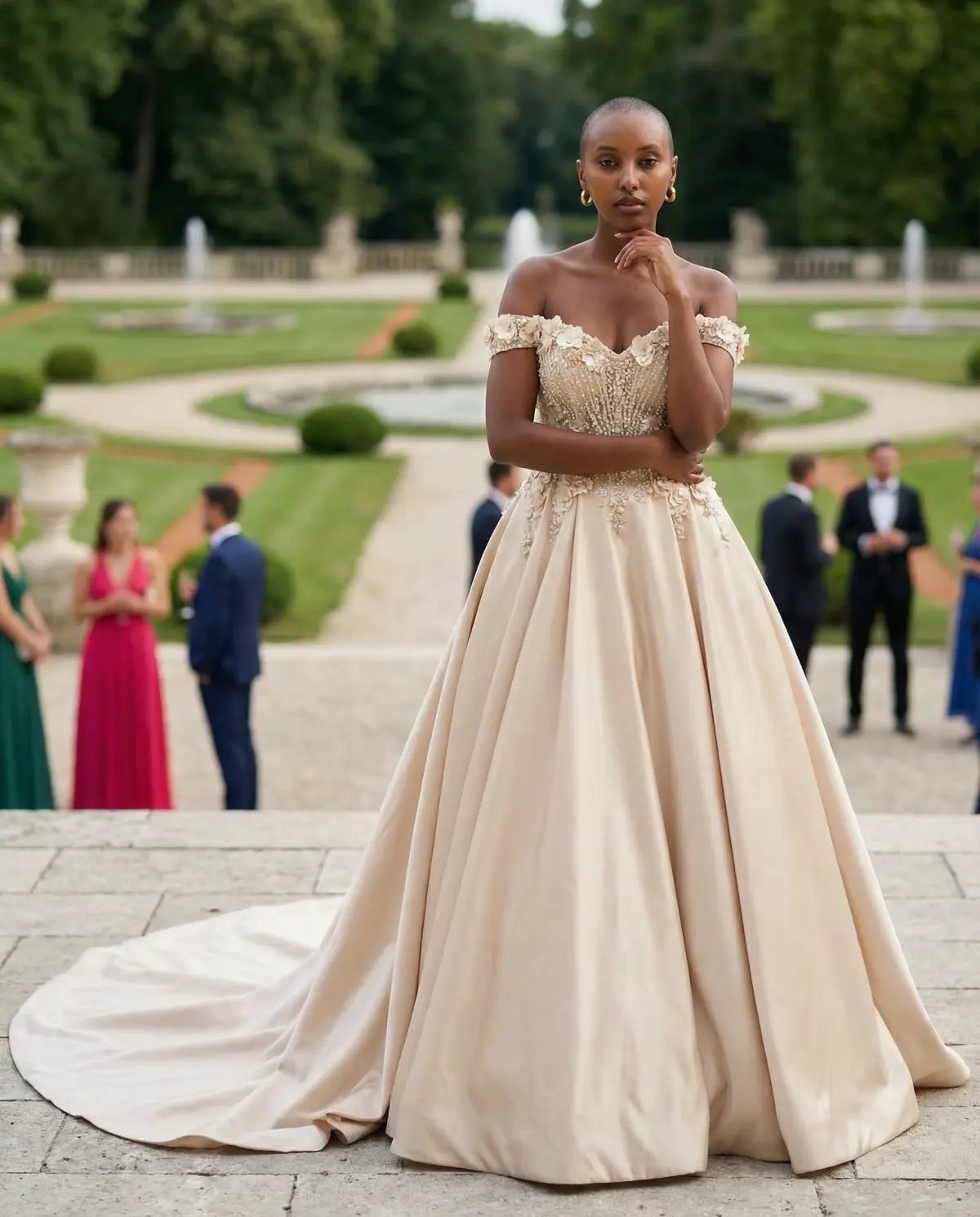
You'll walk into the wedding knowing you hit the right note — formal enough to honor the dress code, comfortable enough to dance through the reception, and confident that what looked good in the photo also looks good on you. Try it on with TryMyDress before you commit to a single dress.
Where to Shop
Once you know which styles look best on you, shop here:
- Revolve – Strongest edit of satin and crepe gowns plus velvet and cowl-neck midis — the exact sweet spot for black-tie optional. Filter by 'Gowns' or 'Midi'. Shop Revolve →
- Nordstrom – 5,800+ wedding-guest dresses with a Formality filter. Use it to see only dressy-formal and black-tie-friendly options across price points. Shop Nordstrom →
- Saks Fifth Avenue – Designer evening and formal dresses if you want a floor-length gown you'll re-wear for other black-tie events — strongest for statement gowns over $500. Shop Saks →
- Anthropologie – BHLDN's wedding-guest shop leans into velvet midis, jewel-tone satin, and sequin-detail gowns — great if you want romantic rather than minimalist formal. Shop Anthropologie →
Explore These Styles
See AI-generated images for these dress silhouettes:
- Ball Gown Dresses →Full, voluminous skirt with a fitted bodice for a fairy-tale look.
- Mermaid Dresses →Body-hugging from bodice to knee, then flares dramatically.
- Column Dresses →Straight, narrow silhouette that follows the body's natural line.